February 25, 2026
Are Google Reviews Reliable in 2026?
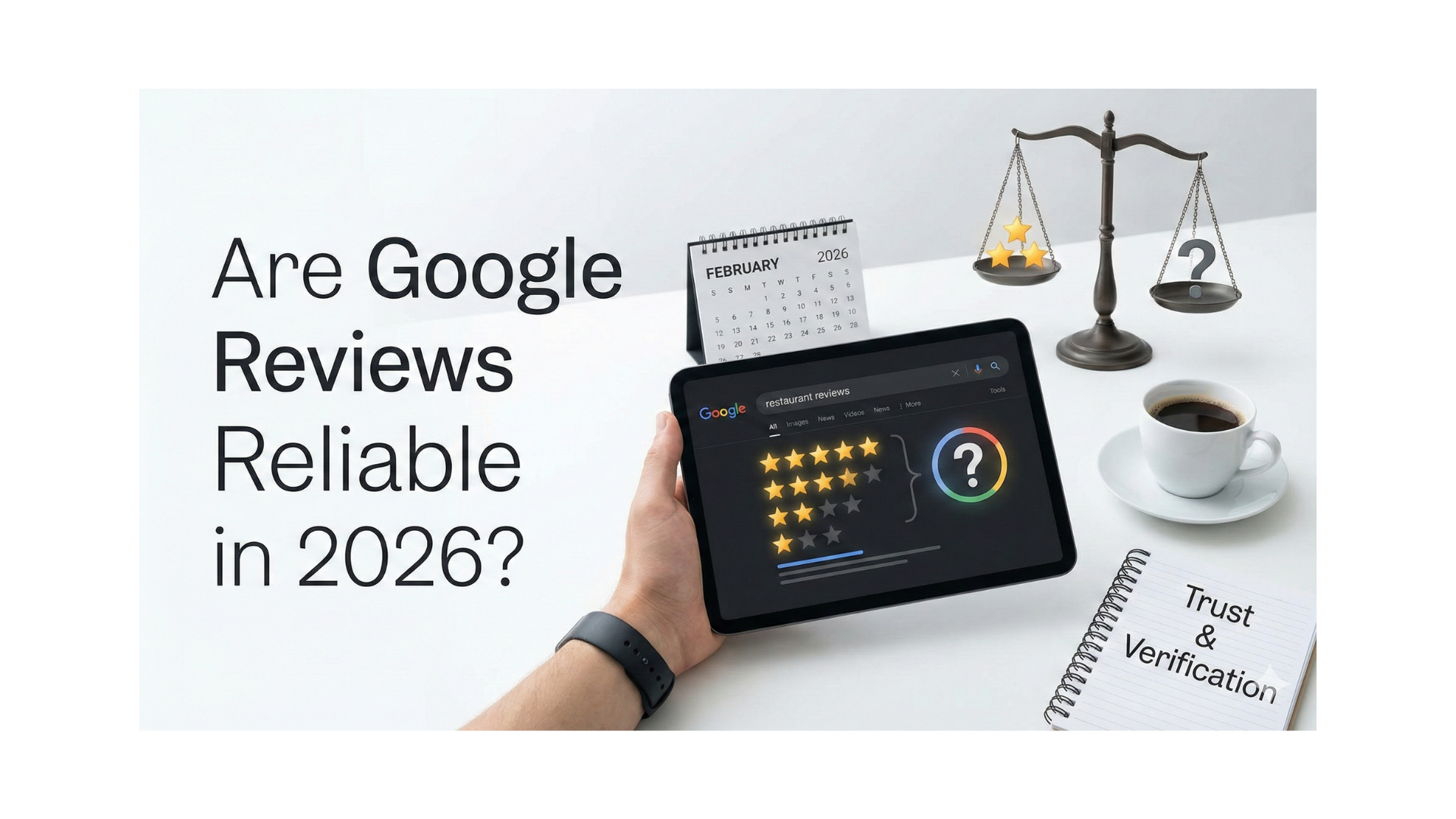
98% of customers read reviews, but Google is deleting millions. See the 2026 reliability data and how to protect your business from the Review Purge.
The 98% Rule: In 2026, nearly every consumer reads reviews before buying; it is no longer optional.
The Google Purge: Google is now using aggressive AI that deletes legitimate reviews along with fakes; you need a constant inflow to replace them.
The Flat-Line Danger: SEO case studies prove that if your consistent review inflow suddenly stops, your Google Maps rankings will plummet.
The Defense: You cannot stop the fakes or the purge, but you can outrun them with Reputigo automated SMS and email campaigns.
An analysis of Google Review trustworthiness in 2026, the massive rise in AI-driven review deletions, and why Review Velocity is now the only metric that matters for local SEO.
The Trust Paradox of 2026

If you own a local business, you are living in a paradox. On one hand, your customers have never been more skeptical of what they read online. On the other, they refuse to hire you without reading it first.
The 2026 data is clear: 98% of consumers now read online reviews for local businesses. It is the single biggest gatekeeper between a Google Search and a phone call.
But here is the problem: The Fake Review Economy has forced Google to deploy aggressive AI filters. In 2026, the question is not just whether reviews are reliable. It is whether your legitimate reviews will even survive.
This article breaks down the hard numbers on review reliability and how you can protect your sales with Google reviews.
The Data: Why You Cannot Ignore Google
Despite the noise, Google Reviews remain the currency of the local economy. They are reliable because they are the only metric that scales with your business visibility.
The Revenue Impact: Data shows that a rating increase of just one star can boost revenue by 5 to 9 percent.
The Trust Factor: While skepticism is high, 88% of consumers still trust online reviews as much as personal recommendations from friends.
The Recency Mandate: This is the most critical stat for 2026. 73% of consumers only pay attention to reviews written in the last month.
If your last 5-star review is from October 2025, to a modern customer, it might as well not exist. You need fresh data.
The Fake Review Reality Check

Are there fake reviews? Yes. Is it as bad as you think? It might be worse.
Current estimates suggest that 10.7% of Google reviews are fake. This includes competitor sabotage, where rivals buy 1-star reviews to tank your ranking, and review farms, where businesses buy 5-star reviews to inflate their ratings.
Google is fighting back, but their weapons are blunt. In 2024 alone, they removed 170 million reviews for policy violations. Trustpilot, similarly, removed 4.5 million fake reviews in a single year.
The New Threat: The AI Purge of Legitimate Reviews
Here is the operational nightmare that most blogs will not tell you: Google new AI is deleting real reviews.
In an effort to kill the fakes, Google algorithms have become hyper-sensitive. They flag spam patterns that often look just like happy customers: reviews left from the same IP address, reviews that are too short such as Great job, and a sudden spike in volume if you finally asked all your past clients at once.
Business owners in 2026 are reporting that up to 2% of reviews are vanishing weekly due to these aggressive filters.
The Flat-Line Effect: How Recency Impacts Rankings
It is not just about trust. It is about how Google decides who ranks at the top of the map.
A pivotal case study by Sterling Sky proved a direct correlation between review recency and Google rankings. They analyzed a business whose local rankings suddenly plummeted. The culprit: the incoming reviews had completely flat-lined because the owner stopped a collection program. Once they started generating fresh reviews again, their rankings recovered.
In another example, a business that lost its top ranking had gone over three years without a new review.
Google algorithm treats review recency as a heartbeat monitor. If your competitors are getting new reviews every week and your profile goes quiet, Google assumes you are losing relevance and drops your rank. You simply cannot afford to stop collecting reviews.
The Only Defense: Automated Review Velocity

You cannot control Google algorithm. You cannot stop a competitor from buying a bot farm. The only thing you can control is Velocity. More reviews consistently means more calls!
If Google deletes 2 reviews this month, you need to have generated 10 new ones to replace them. To avoid a flat-line ranking drop, you need a system that ensures a steady, unstoppable drip of feedback.
1. Automate the Ask and the Follow-Up
You cannot rely on your memory or manually chase down customers who get distracted. You need a system that asks for the review and persistently but politely follows up.
Use Reputigo Automated Campaigns to deploy a sequence of up to three automated SMS or email reminders. These smart follow-ups trigger instantly when a job is done and automatically stop the exact moment a review is left, saving you hours of admin work while maximizing your conversion rate.
2. Capture Detail to Beat the Filters
Google AI deletes low effort reviews. You need detailed feedback from real customers with active profiles.
Use Reputigo Request Reviews with SMS. SMS has a 98% open rate and catches customers on their phones, where they are more likely to write a detailed review.
3. Reply to Prove You Are Real
Consumers look for owner responses to verify the business is active. Use the Reputigo Review Response Generator to write unique, keyword-rich responses in seconds. This signals to Google that the engagement is legitimate.
4. Prove Your Reliability On-Site
Getting the review on Google is only half the battle. When a prospect lands on your website, a static screenshot of a 5-star review from three years ago breeds skepticism.
Use the free Reputigo Reviews Widget to stream your latest, verified Google reviews directly to your website. A live feed of recent feedback instantly proves to visitors that your reputation is authentic, up-to-date, and highly reliable, turning skeptical traffic into paying clients.
Reliability is a Numbers Game
Are Google reviews reliable? Mostly. Are they essential? Absolutely.
In 2026, the businesses that win are not the ones with a perfect 5.0 rating from three years ago. They are the businesses with a 4.8 rating and a steady stream of reviews from this week.
Do not let your reviews flat-line. Start automating your review defense with Reputigo today.
Frequently Asked Questions
Do people actually trust Google reviews in 2026?
Yes, but they filter them. 75% of consumers are concerned about fake reviews, which is why they look for recency (reviews from the last month) and photos to verify authenticity.
Why did Google delete my legitimate review?
How many Google reviews are actually fake?
Estimates place the number around 10.7% on Google. Because Google removes millions of them annually, the live percentage on your profile is likely lower unless you are being targeted by a competitor.